Ancient Cities
UI Update
The Challenge
Ancient Cities is a complex survival and settlement management game with a large amount of interconnected systems and information. The existing interface provided players with all the necessary functionality, but the overall experience felt visually intrusive and difficult to navigate during gameplay.
The objective of the redesign was to create a cleaner and more readable interface that could better support the player without constantly competing with the environment and atmosphere of the game. The challenge was finding a balance between usability, information density, and immersion.
Research & Direction
The redesign focused heavily on readability and hierarchy. Since players spend most of their time observing the world, managing resources, and reacting to events in real time, the interface needed to communicate information quickly without overwhelming the screen.
A large part of the process involved identifying which elements required immediate visibility and which could become more contextual or visually secondary. Reducing visual noise became one of the main priorities throughout the redesign.
Visual Approach
The new UI was designed to feel lighter and less intrusive while still maintaining the grounded and realistic tone of the game.
Compared to the previous interface, the redesign reduces the use of large opaque panels and replaces them with more compact elements, softer transparency, and clearer grouping. This allows the environment itself to remain more visible and helps the player stay connected to the world while interacting with the interface.
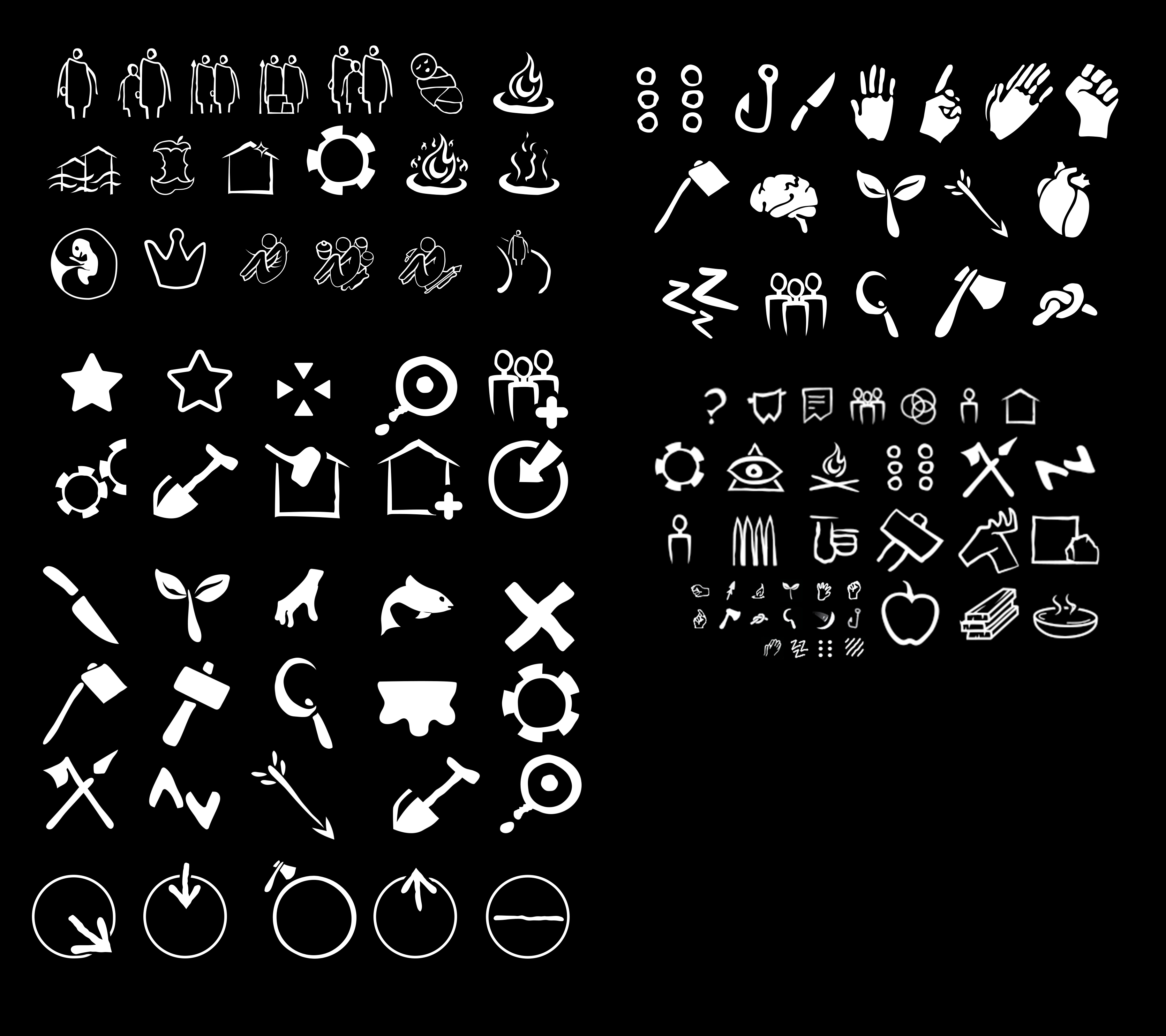
The visual language also became more consistent through the use of simplified iconography, unified spacing, and cleaner alignment systems. The intention was not to radically change the identity of the game, but to modernize the interface and improve clarity without losing the original atmosphere.
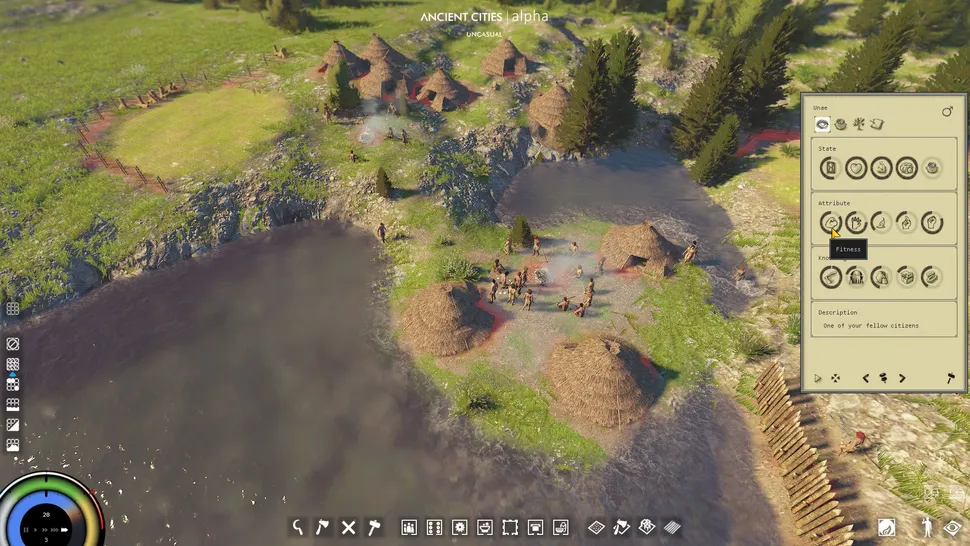 Ancient cities old UI In-game.
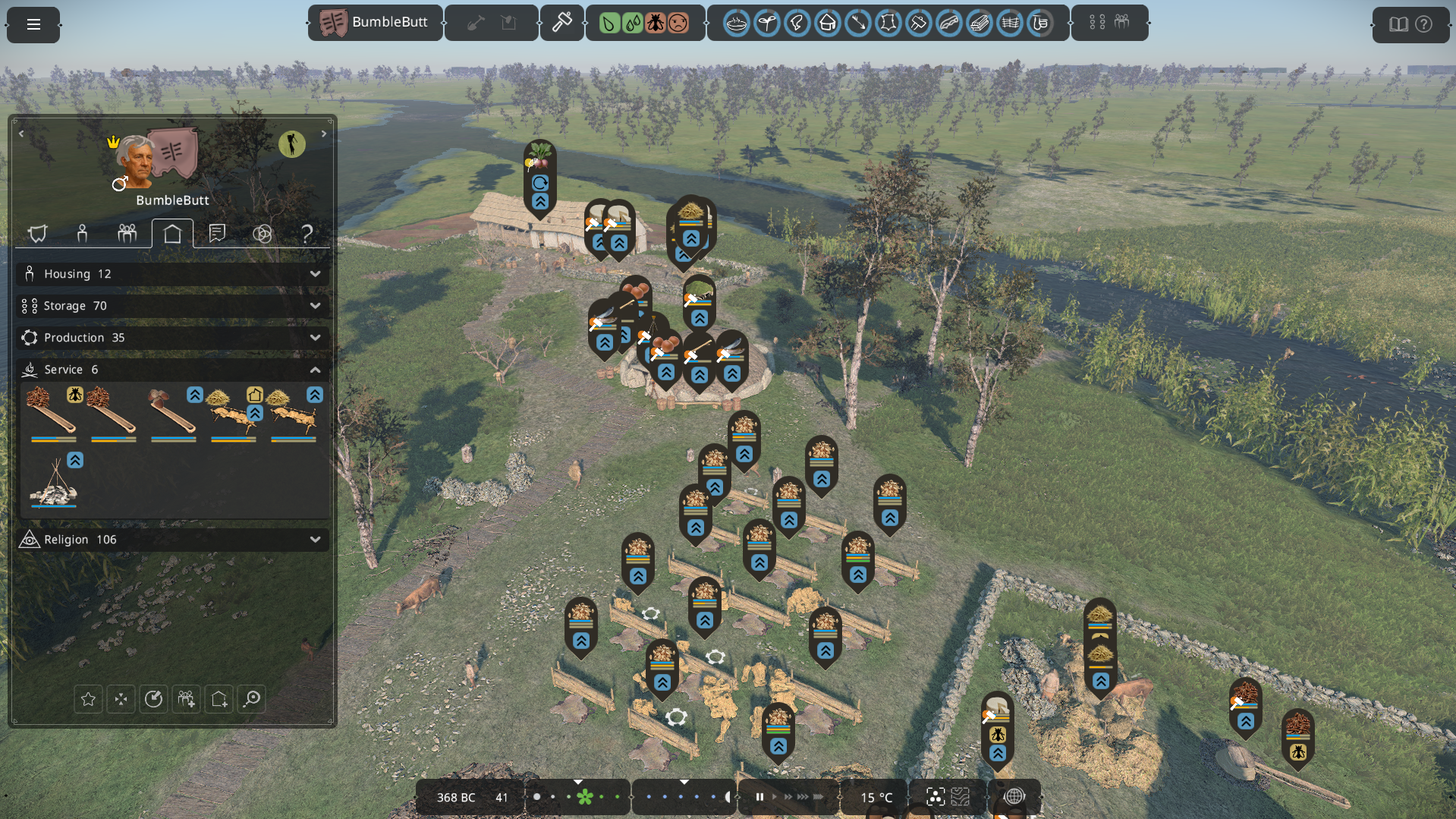 Ancient cities new UI In-game.
Design & Experience
One of the main goals of the redesign was improving how information is prioritized on screen. Frequently used systems such as resources, tribe information, and gameplay actions were reorganized into smaller and more structured interface areas that reduce cognitive load and make navigation feel more intuitive.
The top navigation bar was redesigned to create faster access to core gameplay functions while occupying less visual space. Information panels were condensed and reorganized to improve scanning and readability, helping players process information more efficiently during gameplay.
Special attention was also given to transparency and contrast. Since Ancient Cities relies heavily on environmental immersion, the interface was designed to integrate more naturally with the world instead of visually separating itself from it.
The redesign overall focused on making the UI feel supportive rather than dominant.
Final Result
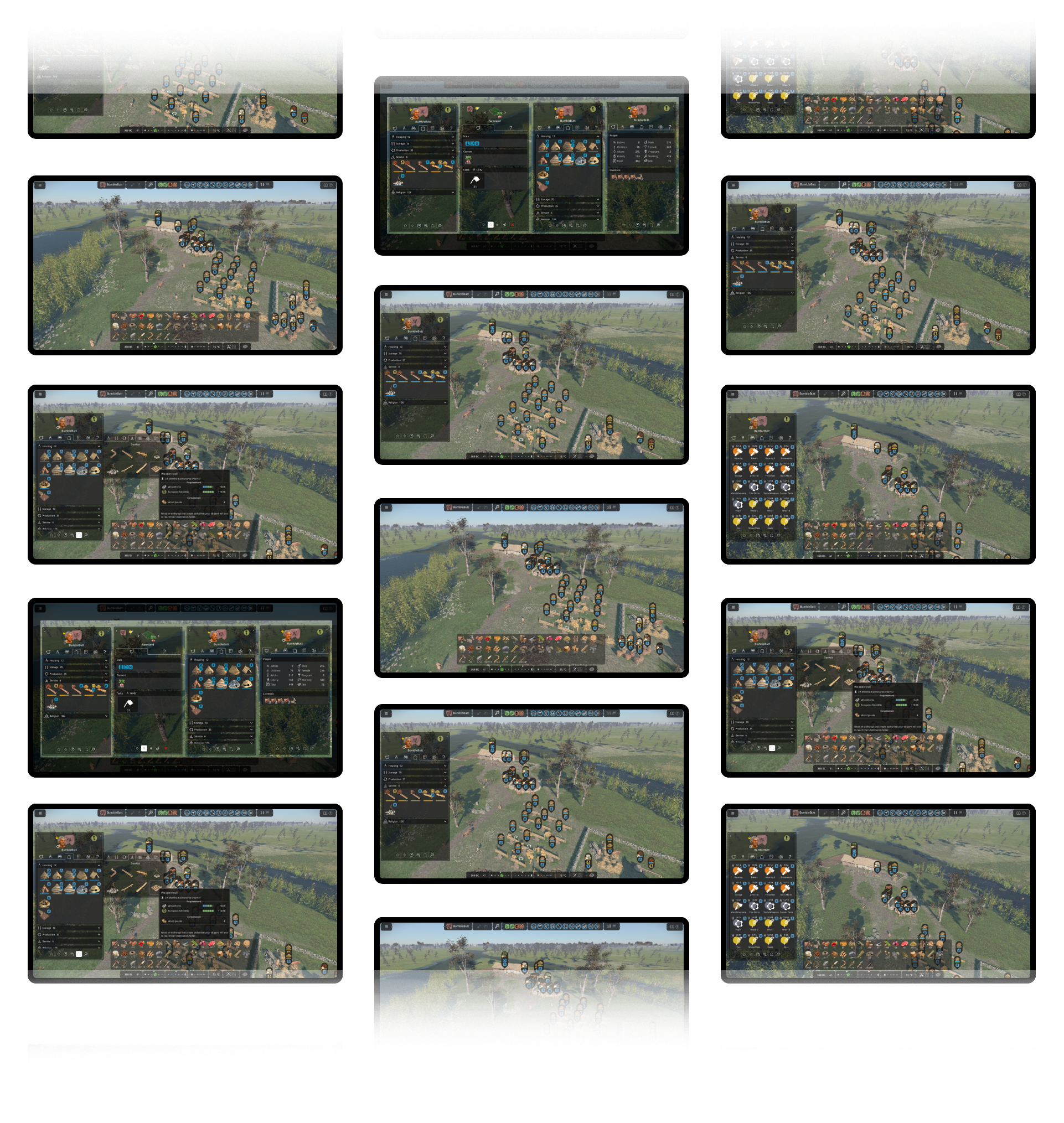
The final result was a cleaner and more modern interface that improves readability and usability while preserving the immersive atmosphere of Ancient Cities.
By reducing visual clutter and restructuring information hierarchy, the redesign allows players to focus more naturally on the gameplay experience while still having quick access to important systems and data.
Reflection
This project reinforced the importance of balancing usability with immersion, especially in system-heavy games where large amounts of information need to coexist with the environment itself.
Working within an already established game also pushed me to think carefully about iteration and improvement rather than complete reinvention, focusing on solving usability problems while respecting the original identity of the project.